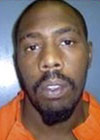
Did the Mumbai mass murderers hail from Britain?
Reports DEBKAfile: “The Foreign Office in London denies the ‘British connection’ highlighted by UK media, some of which say seven of the terrorists were Pakistan British citizens.”
Well of course they would. Let’s wait and see.
Times further reports that the “ten coordinated attacks which began on Wednesday night, when terrorists struck two luxury hotels, a backpacker bar, a Jewish community centre, and Bombay’s main train station, have left at least 195 people dead, including one Briton, and 295 injured.”
DEBKAfile, on the other hand, estimates that the “figure … is expected to rise to 350 as bodies are collected from hotel rooms.”
Important: “tensions swelled between India and Pakistan, where officials insisted that their government had nothing to do with assisting the attackers and promised that they would act swiftly if any connection was found within their country.”
As I’ve pointed out: “American media sentimentalize the reality on the Pakistani ground. The truth is that Musharraf is caught between Scylla and Charybdis. There is indeed a faction of liberals that wants democratic reforms in Pakistan. But among the demonstrators forever punching the air over there are also ‘Islamists, who resent the military crackdown on extremists.’ There are also ample al Qaida and Taliban sympathizers in the tribal regions and among the Pakistani military and Inter-Services Intelligence.”
And: “Evidence unfolded that the gunmen had killed their victims early on in the siege and left the bodies, apparently fooling Indian security forces into thinking that they were still holding hostages.”
What the New York Times finds most troubling “was how, if official estimates are accurate, just 10 gunmen could have caused so much carnage and repelled Indian security forces for more than three days in three different buildings.”
Troubling, maybe, but not surprising. Even more troubling is American parents taking their precious progeny to India to enjoy a spiritual experience. Irresponsible, naïve, and worse.
The Shin Bet isn’t planning to outsource special ops to India, not just yet: “In hostage situations, the first thing the forces are supposed to do is assemble at the scene and begin collecting intelligence,” said a former official in Shin Bet, the Israel Security Agency. In this case, it appears that the forces showed up at the scene and immediately began exchanging fire with the terrorists instead of first taking control of the area. … Mr Barak had offered Mayankote Kelath Narayanan, India’s National Security adviser, any assistance possible, either humanitarian or professional.”
DEBKA: “The number of murdered hostages in one of worst, most deliberate terrorist attacks ever on an Israeli-Jewish community outside Israel rose to nine Saturday, Nov. 29, after the Indian government wrested control of its financial center from Islamist terrorists. The name of Ms Yocheved Harpaz, 59, mother of four from Givitayim joined the four victims from Chabad Center so far identified: Rabbi Gavriel, 29, and Rivka, 28, Holzman, taken hostage in the Chabad Center during their assault on Mumbai Wednesday, Nov. 26. Their 2-year old son, Moshe, was brought to safety by his Indian nanny.
Two more victims identified were Betzion Chroman, 28, father of three, who held dual US-Israeli citizenship, and Leibisch Teitelbaum, an American from Brooklyn. Pathologists from Israel will help identify the others. Chabad Center was seized together with two big hotels and attacks on other high-profile targets across the city.”
Update I: DEBKAfile, as always, is ahead of the reporting curve. It now reveals that “the Mumbai terror attack’s first prototype [was] Mike’s Place, Tel Aviv, 2003”:
“Five years ago, al Qaeda enlisted two Pakistani British Muslims to land by sea in Tel Aviv, seize a large beachside hotel and the nearby US embassy, take hostages and shoot as many as possible. Recruited at London’s radical Finsbury Park mosque (like Shoe-bomber Richard Reid), Asif Muhammed Hanif and Omar Khan Sharif were trained for their mission in neighboring Syria and Gaza Strip.”
“But they missed their main objectives. Instead, they hit Mike’s Place, a bar, killing three Israelis and injuring 60. Those directives, however, recurred strikingly – albeit on a mega-scale – in the Islamist terrorists’ method of operation in Mumbai, on Wednesday, Nov. 26.”
“Mumbai was attacked – not by two but an estimated 30 terrorists, who were assigned seven targets in a world city of more than 16 million. Had the pair of bombers carried off their Tel Aviv mission as instructed, less than two years after 9/11, it would have resonated hugely for al Qaeda. The two British Islamists were prepared as meticulously as the much larger group of Mumbai attackers, spending months in Gaza taking instruction from Hamas in suicide tactics with bomb vests, after their initial indoctrination in Syria.”
“The 2003 attack started going askew when, at the last moment, Hanif and Sharif’s al Qaeda controller changed the original plan. Instead of landing in Tel Aviv by sea, the bombers were told to make their way from Gaza to the Israeli town several days before the target date, register at a hotel with their British passports and thoroughly scout the targeted locations.”
“Although by 2008, al Qaeda had advanced from bomb vests to commando tactics, careful reconnaissance and mounting operations from neighboring countries were abiding elements of their mode of operation, as revealed in the Mumbai assault.”
“The 2003 operation began to unravel after the two bombers, instead of making for a hotel and the US embassy, attacked a bar, only to find their bomb vests were defective. Hanif’s detonated only partly, killing three Israelis and himself, Sharif’s did not work at all and he ran off.”
“Then, too, the UK government disowned any British connection in the incident, which was easier then, given the small scale of the incident.”
“The full story came out only four years later in May 2007, when US forces in Iraq captured Al Hadi al Iraqi, who turned out to be the al Qaeda operative who trained Hanif and Sharif and sent them to Tel Aviv in April 2003.”
Update II (Nov. 30): “Captured terrorist says Israelis were specifically targeted in Mumbai.” Well dah! With society’s unfaithful watchdogs (media) pretending that the larger population is statistically as likely to be the targets of Islamic terrorists than are Jews—such clarification is indeed necessary. “Read on.