Category Archives: Justice

Airport Animals Gone Wild

Criminal Injustice, Fascism, Homeland Security, Justice, Law, The State

Watch this scene:

This woman is doing nothing unusual. She’s hovering close to the baggage screener, overseeing his rummage through her belongings.

The fat, thuggish, affirmative appointees then zero-in on her and proceed to toss her across the room. Then they climb into her.

The lowly subject clearly angered her overlords. A snippy word, perhaps? How dare she!

In a free society NO ONE has the right to lay a hand on another absent a clear threat of physical aggression. Verbal provocation is no excuse for this kind of aggression. As I wrote in “Tasers ‘R’ Us”:

Liberty is a simple thing. It’s the unassailable right to shout, flail your arms, even verbally provoke a politician, unmolested. Tyranny is when those small things can get you assaulted, incarcerated, injured, and even killed.

Did the victim, Robin Kassner, look as though she posed a threat to anything other than her captors’ sense of omnipotence?

Of course, America is not a free country, no matter how many freedom concerts Hannity holds.

Why does the ACLU not tackle the tackling and killing of innocent Americans at airports and elsewhere?

We have:

Don’t Tase Me, Big Bro
Tasers ‘R’ Us
Lunatic Government Occupies Airports

Updated: Amanpour Omits Genocide Of Boers By British

Britain, Criminal Injustice, History, Justice, Media, South-Africa

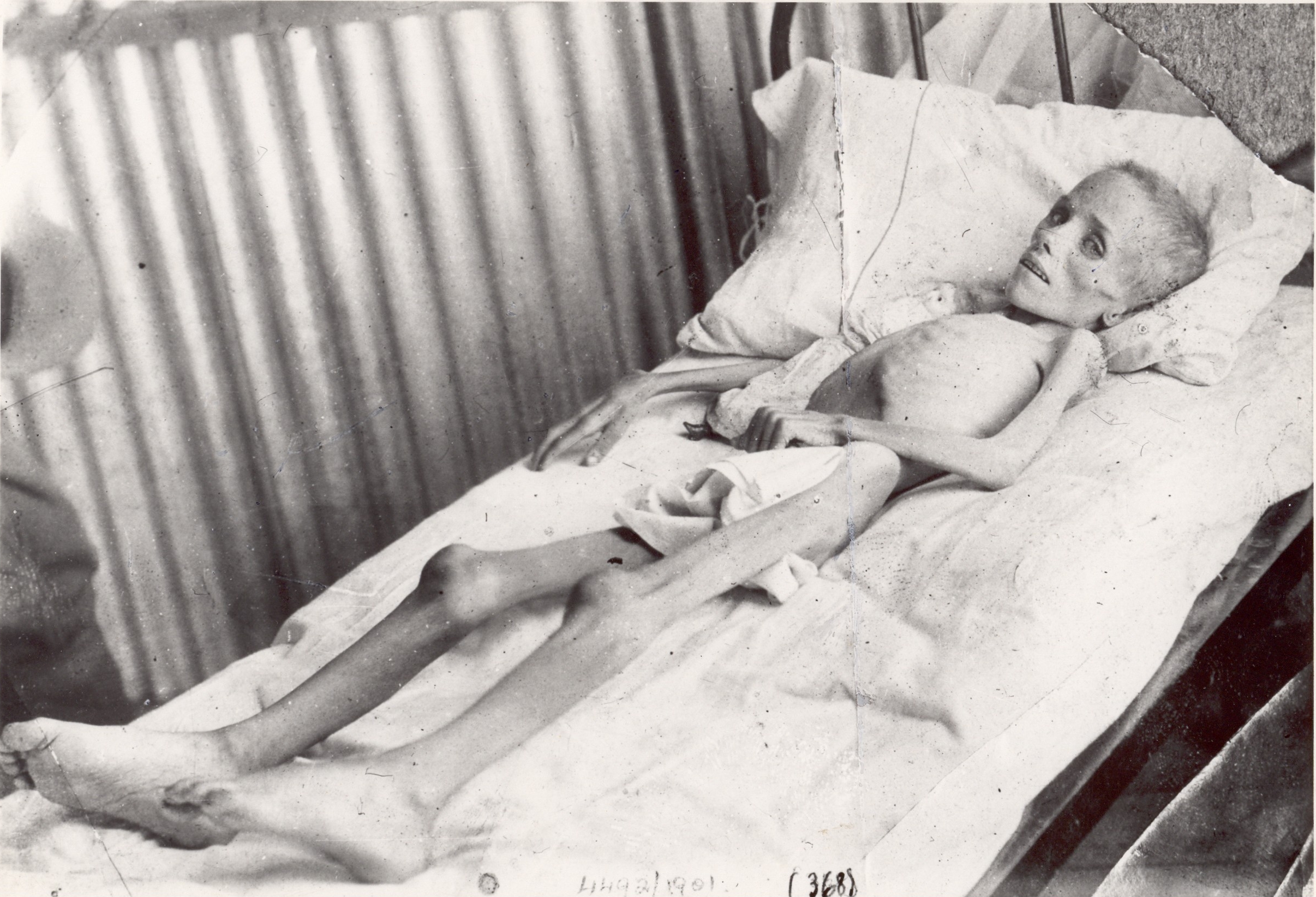
I watched Amanpour’s CNN’s program on genocide. No mention was made of the genocide of Boers by the British during the Second Boer War. Fifteen percent of the Afrikaner population was rounded up, interned, and starved to death–27,000 women and children.

Apparently after some controversy, Amanoour even mentioned the poor Armenians whose wholesale slaughter is usually denied because the slaughterers, our “allies” the Turks, demand the denial of that Holocaust. National interest and all that stuff.

Here is a rather common image from the annals of the Second Boer War (1899-1902). The caption follows, below.

“The young Lizzie van Zyl who died in the Bloemfontein concentration camp: She was a frail, weak little child in desperate need of good care. Yet, because her mother was one of the “undesirables” due to the fact that her father neither surrendered nor betrayed his people, Lizzie was placed on the lowest rations and so perished with hunger that, after a month in the camp, she was transferred to the new small hospital. Here she was treated harshly. The English disposed doctor and his nurses did not understand her language and, as she could not speak English, labeled her an idiot although she was mentally fit and normal. One day she dejectedly started calling for her mother, when a Mrs Botha walked over to her to console her. She was just telling the child that she would soon see her mother again, when she was brusquely interrupted by one of the nurses who told her not to interfere with the child as she was a nuisance.”

Update: JP’s heartfelt comment hereunder with respect to how Afrikaners were treated warrants mention of another aspect of genocide, salient in the plight of the Afrikaners, then as now: demonization. The British liked the Bantu; and hated the Boer. They demonized the Boers as retarded and stupid and would hang notices around the necks of Afrikaner kids caught speaking Afrikaans at school: “I am a donkey.” (Source: The White Tribe of Africa: South Africa In Perspective by David Harrison, p. 48) Need I mention the Bantu’s “Kill the Boer” slogans?

What The Torah & Talmud Teach About Moral Hazard (Bailouts)

Economy, Free Markets, Hebrew Testament, Judaism & Jews, Justice

In “Jews Against Judaism,” I highlighted The Jerusalem Institute for Market Studies’ efforts to educate about Judaism’s philosophical affinity with the free market.

Now JIMS, with which I am affiliated, has inaugurated the Center for the Study of Judaism and Economics.

Delivering the inaugural lecture was Nobel laureate economist Professor Robert (Yisrael) Aumann. Professor Aumann addressed the role ascribed to economic incentives in the Torah and Talmud—for example, “unfettered price competition” and the imprimatur to collect on loans.

Professor Aumann also talked about the many discussions of the moral hazard problem in the Torah and Talmud, and how moral hazard is currently at the heart of the faulty proposals currently being offered to solve the current financial crisis. The term moral hazard is used by economists to describe the fact that when an individual, a firm or an institution is “insured”, there is an incentive to act less carefully and take harmful risks.

This should not surprise anyone who appreciates the centrality of justice in the Jewish tradition. What are economic laws if not natural laws? And what is the natural law if not immutable and just? It follows from this that to adhere to the economic laws of nature is to be faithful to truth and justice.

Justice, justice shall you pursue.” (Devarim 16:20)

What The Torah & Talmud Teach About Moral Hazard (Bailouts)

Free Markets, Hebrew Testament, Judaism & Jews, Justice

In “Jews Against Judaism,” I highlighted The Jerusalem Institute for Market Studies’ efforts to educate about Judaism’s philosophical affinity with the free market.

Now JIMS, with which I am affiliated, has inaugurated the Center for the Study of Judaism and Economics.

Delivering the inaugural lecture was Nobel laureate economist Professor Robert (Yisrael) Aumann. Professor Aumann addressed the role ascribed to economic incentives in the Torah and Talmud—for example, “unfettered price competition” and the imprimatur to collect on loans.

Professor Aumann also talked about the many discussions of the moral hazard problem in the Torah and Talmud, and how moral hazard is currently at the heart of the faulty proposals currently being offered to solve the current financial crisis. The term moral hazard is used by economists to describe the fact that when an individual, a firm or an institution is “insured”, there is an incentive to act less carefully and take harmful risks.

This should not surprise anyone who appreciates the centrality of justice in the Jewish tradition. What are economic laws if not natural laws? And what is the natural law if not immutable and just? It follows from this that to adhere to the economic laws of nature is to be faithful to truth and justice.

Justice, justice shall you pursue.” (Devarim 16:20)