Category Archives: Political Philosophy

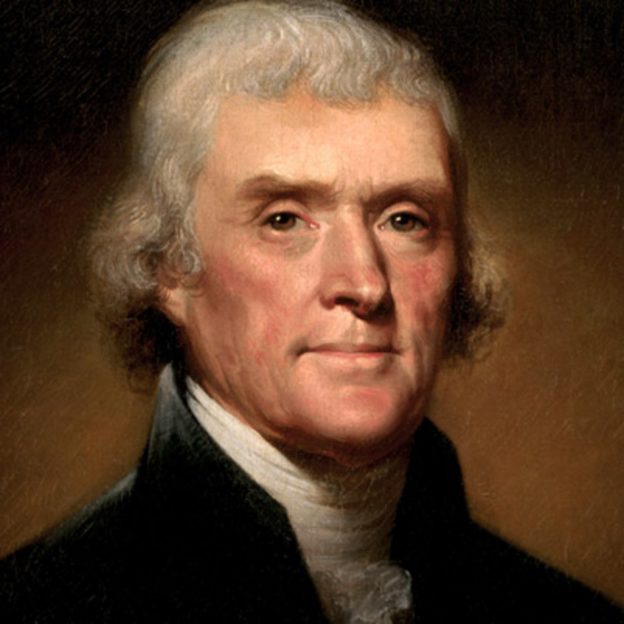
A Toast To Thomas Jefferson—And The Anglo-Saxon Tradition That Sired And Inspired Him

America, Classical Liberalism, History, Human Accomplishment, IMMIGRATION, Nationhood, Natural Law, Political Philosophy

“Let us … toast Thomas Jefferson—and the Anglo-Saxon tradition that sired and inspired him.”ILANA MERCER, July 4, 2019

The Declaration of Independence—whose proclamation, on July 4, 1776, we celebrate—has been mocked out of meaning.

To be fair to the liberal Establishment, ordinary Americans are not entirely blameless. For most, Independence Day means firecrackers and cookouts. The Declaration doesn’t feature. In fact, contemporary Americans are less likely to read it now that it is easily available on the Internet, than when it relied on horseback riders for its distribution.

Back in 1776, gallopers carried the Declaration through the country. Printer John Dunlap had worked “through the night” to set the full text on “a handsome folio sheet,” recounts historian David Hackett Fischer in Liberty And Freedom. And President (of the Continental Congress) John Hancock urged that the “people be universally informed.”

Thomas Jefferson, the author of the Declaration, called it “an expression of the American Mind.” An examination of Jefferson‘s constitutional thought makes plain that he would no longer consider the mind of the collective mentality of the D.C. establishment “American” in any meaningful way. For the Jeffersonian mind was that of an avowed Whig—an American Whig whose roots were in the English Whig political philosophy of the seventeenth and eighteenth centuries.

By “all men are created equal,” Jefferson, who also wrote in praise of a “Natural Aristocracy,” did not imply that all men were similarly endowed. Or that they were entitled to healthcare, education, amnesty, and a decent wage, à la Obama.

Rather, Jefferson was affirming the natural right of “all men” to be secure in their enjoyment of their “life, liberty and possessions.”

This is the very philosophy Hillary Clinton explicitly disavowed during one of the mindless presidential debates of 2007. Asked by a YouTubester to define “liberal,” Hillary revealed she knew full-well that the word originally denoted the classical liberalism of the eighteenth and early nineteenth centuries. But she then settled on “progressive” as the appropriate label for her Fabian socialist plank.

Contra Clinton, as David N. Mayer explains in The Constitutional Thought of Thomas Jefferson, colonial Americans were steeped in the writings of English Whigs—John Locke, Algernon Sidney, Paul Rapin, Thomas Gordon and others. The essence of this “pattern of ideas and attitudes,” almost completely lost today, was a view of government as an inherent threat to liberty and the necessity for eternal vigilance.

Jefferson, in particular, was adamant about the imperative “to be watchful of those in power,” a watchfulness another Whig philosopher explained thus: “Considering what sort of Creature Man is, it is scarce possible to put him under too many Restraints, when he is possessed of great Power.”

“As Jefferson saw it,” expounds Mayer, “the Whig, zealously guarding liberty, was suspicious of the use of government power,” and assumed “not only that government power was inherently dangerous to individual liberty but also that, as Jefferson put it, ‘the natural progress of things is for liberty to yield and government to gain ground.’”

For this reason, the philosophy of government that Jefferson articulated in the Declaration radically shifted sovereignty from parliament to the people.

But Jefferson‘s muse for the “American Mind” is even older.

The Whig tradition is undeniably Anglo-Saxon. Our founding fathers’ political philosophy originated with their Saxon forefathers, and the ancient rights guaranteed by the Saxon constitution. With the Declaration, Jefferson told Henry Lee in 1825, he was also protesting England‘s violation of her own ancient tradition of natural rights. As Jefferson saw it, the Colonies were upholding a tradition the Crown had abrogated.

Philosophical purist that he was, moreover, Jefferson considered the Norman Conquest to have tainted this English tradition with the taint of feudalism. “To the Whig historian,” writes Mayer, “the whole of English constitutional history since the Conquest was the story of a perpetual claim kept up by the English nation for a restoration of Saxon laws and the ancient rights guaranteed by those laws.”

If Jefferson begrudged the malign influence of the Normans on the natural law he cherished, imagine how he’d view our contemporary cultural conquistadors from the South, whose customs preclude natural rights and natural reason!

Naturally, Jefferson never entertained the folly that he was of immigrant stock. He considered the English settlers of America courageous conquerors, much like his Saxon forebears, to whom he compared them. To Jefferson, early Americans were the contemporary carriers of the Anglo-Saxon project.

The settlers spilt their own blood “in acquiring lands for their settlement,” he wrote with pride in A Summary View of the Rights of British America. “For themselves they fought, for themselves they conquered, and for themselves alone they have right to hold.” Thus they were “entitled to govern those lands and themselves.”

And, notwithstanding the claims of the multicultural noise machine, the Declaration was as mono-cultural as its author.

Let us, then, toast Thomas Jefferson—and the Anglo-Saxon tradition that sired and inspired him.

©2019 ILANA MERCER
WND.com
July 4, 2019

SEE: “A July Fourth Toast To Thomas Jefferson—And The Declaration,” by Ilana Mercer, July 4, 2019

UPDATED (7/5): ‘Systemic Racism’ Or Systemic Rubbish? The Latter!

Argument, Logic, Political Philosophy, Race, Racism, Reason

A media person made a ponderous comment on Twitter about the tiff between Seattle Mayor Jenny Durkan, who “transmitted a letter to the City Council, urging members to take action against Councilwoman Sawant.”

In response, I summed up the empty fracas, paraphrasing “The Barbarians Are In Charge: Scenes From The Sacking of America“:

The Sawant and Durkan dynamic gives new meaning to the ‘broad’ sweep of ideas in Seattle: A socialist calls on a progressive to resign over abuse of power (what power?) and systemic racism (a meaningless abstraction), while the city is sacked.

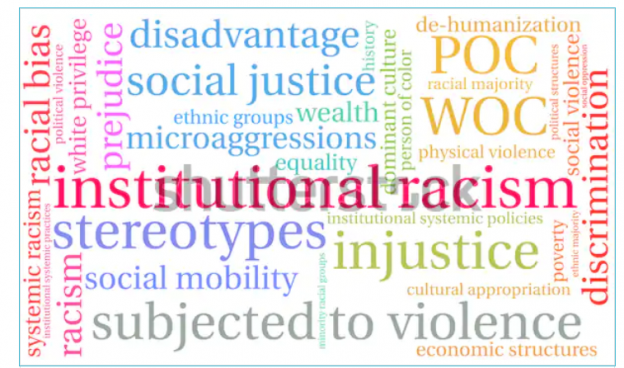
William Barnes replied on twitter to the “systemic racism” (meaningless abstraction) refrain: “This is an important point. If someone tells you racism is systemic, they should be able to provide specifics.”

Indeed, operationalize the nebulous variable of “systemic racism,” or get out of my face. Until you have methodologically and statistically operationalized the abstraction that is “racism”—it remains is nothing but a thought crime. And even when you have, thought crimes are nobody’s business in free societies.

UPDATE (7/5):

On CNN, comedian DL Hughley had compared the THOUGHT CRIME of racism to the BODILY ASSAULT that is COVID19. Illogical. He says that whitey can be an asymptomatic carrier of racism. Just because you haven’t done anything racist, ventured Hughley, it doesn’t mean you AIN’T RACIST. It’s ironic that the nebulous abstraction that is “systemic racism” comes out of the West (postmodernism). After all, such “thinking” flouts Western law and logic.

UPDATED (8/4/020): ‘Mercy For Animals’ Contaminates Worthy Message With The Illogic Of Racial Politics

Argument, COVID-19, Environmentalism & Animal Rights, Free Speech, Logic, Political Philosophy, Politics, Propaganda, Race, Racism, Reason

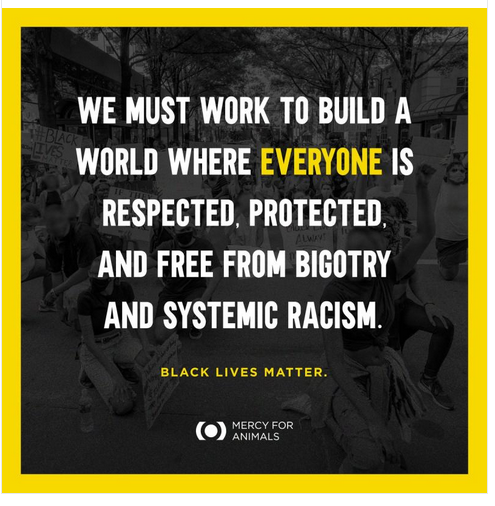
All good people would intuitively support “Mercy For Animals,” if the organization refrained from veering into racial politics. Such fuzzy, imprecise thinking, as expressed in this fortune-cookie quality notice above, will only serve to weaken the appeal of the worthy causes of “Mercy For Animals.”

In connecting the cause of animals with the “Black Lives Matter” production, “Mercy For Animals” has ridiculously and irrationally conflated unrelated issues. It’s akin to the epidemiologist who suddenly starts rabbiting about racism as a pandemic.

Racism is generally a thought crime—the crime of thinking politically impure thoughts.

COVID-19, the pandemic, is the spread of a physical, contagious disease that affects the body.

Logically, never the twain shall meet.

Aside from spouting irrational stupidity, such “medics” have crossed over into politics—policing thoughts, in particular—and should forthwith, as a result, lose all medical credibility.

Likewise, “Mercy for Animals” should stick to their needy charges: abused and misused animals.

UPDATED (8/4/020): No learning curve.

“Mercy for Animals” should not be muddying its laudable message and mission with political overtones. Leave off the racism, diversity doxology and such political constructs.

Animals don’t deserve to have their cause polluted. MFA will also lose supporters and donors who understand that a message not polluted by politics maximizes outcomes for the critters.

Comments Off on UPDATED (8/4/020): ‘Mercy For Animals’ Contaminates Worthy Message With The Illogic Of Racial Politics

UPDATED II (4/17): NEW COLUMN: Coronavirus And Conspiracy: Don’t Be A ‘Covidiot’

Conspiracy, Government, Healthcare, libertarianism, Liberty, Political Philosophy, The State

NEW COLUMN (with YOUTUBE video) is “Coronavirus And Conspiracy: Don’t Be A ‘Covidiot.’” The column is on WND.COM and the Unz Review.

An excerpt:

Reality is bad enough; there is no need to explain the world using conjecture and fantasy. The facts suffice.

Government is bad enough. There is no need to explain it using conjecture and fantasy. The facts about it suffice.

In particular, imputing garden variety government evils to conspiracies is based on the following faulty premise: Government generally does what is good for us (NOT). So, whenever we think it is failing in a mission it fulfills so well (NOT), we should look beyond the facts for something more sinister (NOT).

As if The State’s natural quest for expanded power were not enough to explain the events! Why, for example, would you need to search for the “real reason” behind an unjust, unscrupulous war, unless you honestly believed government would never prosecute such a war? History belies this delusion. Even when government prosecutes a just war, it finds ways to turn it into an unjust war by prolonging it. After all, a protracted crisis demands more taxpayer funds. Cui bono? For whose benefit?

There’s no conspiracy here. The constituent elements of the bureaucratic behemoth that is government continuously work to increase their sphere of influence. Thus, grunts don’t benefit from war; the generals everybody reveres do. It is therefore but natural for the soldier’s superiors to pursue war for war’s sake. By virtue of its size, reach, and many usurpations, the U.S. government is a destructive and warring entity—no matter which of one the big government parties is at the helm.

Clearly, conspiracy thinking is not congruent with a view of government as fundamentally antagonistic to the welfare of the individual and civil society, a position held by a good number of libertarians and conservatives.

Some conspiracy claims are more consequential than others. Those pertaining to coronavirus are an example. Let us, then, briefly discuss coronavirus and conspiracy. Watch the YouTube corresponding to this section of the column here. …

READ THE REST. NEW COLUMN is “Coronavirus And Conspiracy: Don’t Be A ‘Covidiot.’” It’s on WND.COM and the Unz Review.

UPDATE I (4/17):

The great Chris Matthew Sciabarra, Ph.D, writes:

I always read my friend Ilana Mercer’s essays with great interest, and whether one agrees or disagrees with her on this or that issue, she never ceases to be thought-provoking, including in this current piece, “Coronavirus and Conspiracy: Don’t Be a ‘Covidiot‘”—which is timely for those among us who are always concerned about the growth of government power in times of crises. Check it out.

UPDATE II (4/18):