
Category Archives: Psychology & Pop-Psychology

Outsourcing Life To The Expert Class: The Menace Of The Managerial Class

COVID-19, Family, Government, Outsourcing, Psychiatry, Psychology & Pop-Psychology, The State

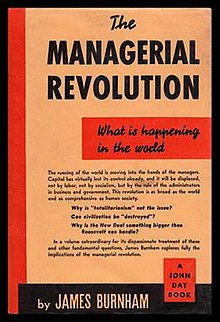
In James Burnham’s Managerial State, explains , “political power moves away from … institutions like Congress and toward the executive bureaucracy … The effect is the reduction of nonmanagerial political institutions to increasingly nominal status. Forms of ‘constitutionalism’ may still be permitted to exist, but the managerial elite does not derive its power or legitimacy from them. It can, therefore, easily manipulate or simply ignore these institutions while pursuing its own ends.”

The managerial elite has given us our dysfunctional, atomistic, fragmented society, where traditional support systems no longer exist. To pick up the slack we have the Expert Class.

In a way, the insidious Expert Class that shapes and manages perceptions about public affairs is an extension of the Managerial State. The expert class tends to remove moral and medical decisions from individuals, families, and communities of faith by medicalizing problems of living.

Once, big-on-the-military actor James Wood got word about a veteran who was about to shoot himself in some remote location. So he galvanized the … experts. He got him “help.” He outsourced the problem.

Most people need community, not therapy.

The reason people are desperate and depressed is not because they don’t have a suicide hotline’s number handy or an AA support group buddy; but because they are bereft of family and community.

This simplest of logical deductions we are no longer even able to arrive at without outsourcing thinking to the generators of empirical evidence, the expert class.

Here is that “doh!” factor, confirmed by The Economist in, “A pandemic of psychological pain: How to reduce the mental trauma of covid-19″:

Humans are resilient. Those who experience trauma mostly cope. When their homes are destroyed by earthquakes, they rebuild them and carry on. Even the mass bombing of cities in the second world war did not break civilian morale. Nonetheless, the world should take the collective mental damage of covid-19 seriously. Steps to reduce it cost little, and can benefit not only individuals but also society more broadly.

Research into previous disasters suggests that survivors’ long-term mental health depends more on “perceived support” than “received support”. In other words, donations of money or food matter less than the feeling that you can turn to your neighbours for help. Such help is typically offered spontaneously, but governments can also chip in. France, for example, sets up “medical and psychological emergency units” after terrorist attacks and other disasters. These try to minimise the long-term mental-health consequences of such events by offering immediate walk-in psychological support near the site of the disaster. Several cities in France have reactivated this “two-tent model”, one for medical care and the other for mental care, to help people cope with the toll of the virus.

Some people draw comfort from the fact that they are not alone—millions are facing the same tribulations at the same time. But the pandemic also presents unusual challenges. No one knows when it will end. Social distancing makes it harder to reconnect with others, a step in recovering from trauma. And the economic shock of covid-19 has undermined mental-health services everywhere, but especially in poor countries.

The most important measures will be local. A priority should be bringing people together by, say, expanding internet access. Mutual-aid networks (eg, WhatsApp groups to deliver groceries to the elderly), which tend to peter out once the initial disaster subsides, should instead be formalised and focused on the most vulnerable. Mental-health professionals should connect patients to such services, and train more lay folk as counsellors. In Zimbabwe, well before the pandemic, hundreds of grandmothers were taught how to provide talk therapy on village benches to depressed neighbours who could not afford to visit a distant clinic. Such innovations can work elsewhere, too.
UPDATE (2/22/021): American Society’s Unnatural Attitude to Aging Naturally

Culture, Ethics, Family, Morality, Psychiatry, Psychology & Pop-Psychology, Relatives, The Zeitgeist

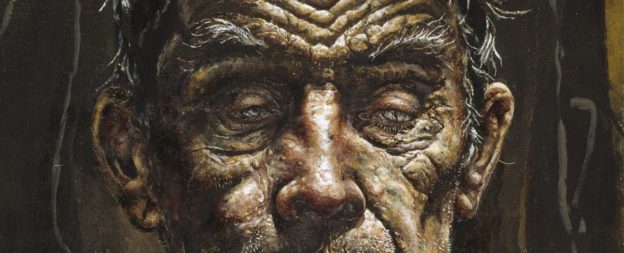
In “No Country for Old Age,” The Hedgehog Review’s Joseph E. Davis writes, in essence, of the cruel biological reductionism and medicalization of old age, a natural stage of life that ought to be valued:

“When it comes to old age, illness, and death, little remains to us of common meaning or shared social rituals.”

Here are some of many profundities excerpted:

… In our society, to come directly to my point, old age is understood and framed in ways that lead inevitably to its devaluation. Its status is low and arguably is falling.
… old age [is seen as having] no value in itself. ‘Old’ signifies bodily decline, while “success” involves a ceaseless battle to defeat degeneration, and hope is always invested in the prospect of overcoming limits through self-reliance and technological interventions.

There is no space here for stillness or release, no sense of value or consolation in the evening of life. Even cultivating spirituality is framed instrumentally in terms of promoting ‘better physical and mental health in old age.’ An imperative to defeat aging and even death can only consign these realities to fear, shame, and avoidance.

…Representations of old age that add censure and shame to greater dependence and loss of one’s powers can only make matters worse.

… the sociologist Norbert Elias argues that, over time, these weakened bonds and other common features of the later years have been compounded by increased individualization and the isolation of the “ageing and dying from the community of the living.” In contemporary society, Elias argues, older people are “pushed more and more behind the scenes of social life,” a process that intensifies their devaluation, emotional seclusion, and loss of social significance. A physical and institutional sequestering and a pervasive cultural tendency to “conceal the irrevocable finitude of human existence” have made it harder for them and those around them to relate to, understand, and interact with one another. The aged and dying are less likely to receive the help and affection they need, and more prone to different forms of loneliness and painful feelings of irrelevance. “Never before,” Elias writes, “have people died as noiselessly and hygienically as today in [more developed] societies, and never in social conditions so much fostering solitude.”

… Health and longevity are the ends to which remedial action is directed and by which outcomes are evaluated. Even in discussions that include exhortations to build strong connections and communities, loneliness and isolation are treated as individual conditions, and references to community easily coexist with talk of genetic hardwiring, the role of the prefrontal cortex, and the ways in which neural mechanisms might generate feelings of loneliness.

… Typical advice is often some form of self-help: “take a class,” “get a dog,” “volunteer”; build your confidence with social skills training; seek out behavioral therapy. With therapy—highlighted for its positive “impact”—the aged lonely can be helped to see that their low self-worth, perceived isolation, or feelings of being unwanted are probably just cognitive misapprehensions that need to be “restructured.” Once this restructuring is accomplished, the aged can better match what they want in social life with what they have and get on with aging with more success. The status quo can now appear in a new, more uplifting light.

… Current constructions of old age in individualistic terms of self-reliance, the fit body, productive accomplishments, or an imperative to deny or defeat aging technologically cannot but deepen our predicament and the need to render it invisible. This is what makes the cultural logic of these constructions irredeemable. They leave us in a cul-de-sac, hemmed in by a predatory commercial culture, a punishing ideology of health, fewer and weaker social ties, an ethic of active striving and mastery, and a mechanistic picture of ourselves. Moving beyond the devaluation of old age requires other orientations and other practices for which we must look elsewhere—to other societies, past or present, and to older traditions. …

… The social orientation of the evening of life need not be individualistic, but toward family and the localization and strengthening of social relations. Similarly, the view of the life cycle need not take its bearings from youth and middle age but from roles and identities appropriate to old age, with their own norms and rewards. These norms and rewards need not be defined in terms of active striving and productivity, but in terms of release, such as from social climbing, and a more contemplative attitude toward the world.

“No Country for Old Age,” by Joseph E. Davis, The Hedgehog Review.

UPDATE (2/22/021): And the good about aging in America.

A Color-Coded Theory Of Causation In Mass-Shootings

Crime, Logic, Psychiatry, Psychology & Pop-Psychology, Race, Reason

A CNN profiler blamed the sense of white privilege for mass shootings carried out by white, young men. These men, the woman was saying, cannot adjust to a necessarily changing society. They cling to the way things were, when the country was predominantly white.

In other words, the oppressor in these young white men wants to continue to oppress. When whites commit unspeakable acts of violence, it only ever comes from a place of power and privilege.

With the same distressing regularity, we are lectured that when browns and blacks commit unspeakable acts of violence, it only ever comes from a place of powerlessness. Black or brown evil is a consequence of oppression.

Excuse me: You have to apply the same method in getting to the etiology/causation of crime.

You can’t have a color-coded theory of causation; one for whites; another for blacks and brows.

I’ve said in my pieces over the years, many times: These individuals all are evil, not ill. No good comes of medicalizing bad behavior:

“School Shootings Are A Moral-Health, Not Mental-Health, Problem”

The facts:

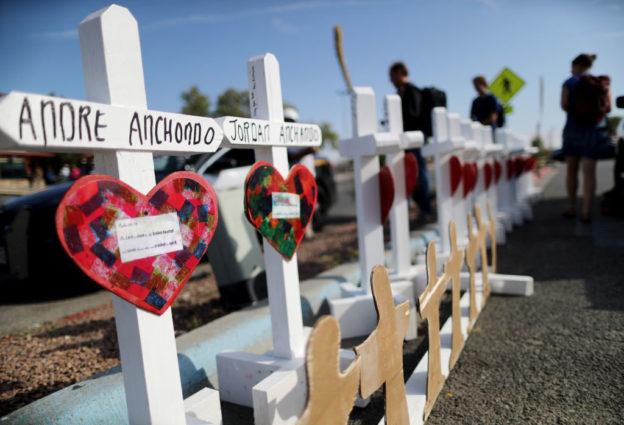
Two shootings: At least 31 people were killed over the weekend in mass shootings in Texas and Ohio.
El Paso: 22 people were killed in El Paso after a mass shooting on Saturday. Police said they found an anti-immigrant document espousing white nationalist and racist views, which they believe was written by the suspect. He may face hate crime charges in addition to capital murder charges.
Dayton: Another nine people were killed in a shooting in the Oregon District of Dayton, Ohio. The suspect in that shooting is dead.

NEW COLUMN: Christine Blah-Blah Ford & Her Hippocampus

Ethics, Gender, Ilana Mercer, Pseudoscience, Psychiatry, Psychology & Pop-Psychology, Science

“Christine Blah-Blah Ford & Her Hippocampus” is the current column, now on Townhall.com (slightly abridged).  

An excerpt:

One of many cringe-making moments in Christine Blasey Ford’s protracted complaint before the Senate Judiciary Committee—and the country—was an affectation-dripping reference to her hippocampus.

“Indelible in the hippocampus” was the memory of supreme court nominee Brett Kavanaugh sexually assaulting her, some 36 years back, asserted Ford in that scratchy, valley-girl voice of hers.

With that, the good “doctor” was making a false appeal to scientific authority. Ford had just planted a falsity in the nation’s collective consciousness. The accuser was demanding that the country believe her and her hippocampus.

All nonsense on stilts.

We want to believe that our minds record the events of our lives meticulously, and that buried in the permafrost of our brain, perfectly preserved, is the key to our woes.

Unfortunately, scientific research negates the notion that forgotten memories exist somewhere in the brain and can be accessed in pristine form.

Granted, we don’t know whether She Who Must Never Be Questioned recovered the Judge-Kavanaugh memory in therapy. That’s because, well, she must never be questioned.

Questioning the left’s latest sacred cow is forbidden. Bovine Republicans blindly obey.

I happened to have covered and thoroughly researched the “recovered memory ruse,” in 1999. Contrary to the trend, one of my own heroes is not Christine Blah-Blah Ford, but a leading world authority on memory, Elizabeth Loftus.

Professor Loftus, who straddles two professorships—one in law, the other in psychology—had come to Vancouver, British Columbia, to testify on behalf of a dedicated Richmond educator, a good man, who had endured three trials, the loss of a career and financial ruin because of the Crown’s attempts to convict him of sexual assault based on memories recovered in therapy. …

… READ THE REST.  “Christine Blah-Blah Ford & Her Hippocampus” is now on Townhall.com.

Unabridged, the column appears on other favorite sites: WND.com, The Unz Review, Constitution.com, and American Greatness.