Category Archives: Ethics

UPDATE II: A Halibut's Heart In A Harpy's Hand

Environmentalism & Animal Rights, Ethics, Foreign Aid, Morality, Sarah Palin

On her eponymous reality show, “Sarah Palin’s Alaska,” the former governor of Alaska and her daughter Bristol bond over ‘stunning’ halibuts and gutting them.” There is nothing wrong with showing the public something of the realities of commercial fishing. The Palins once made their living this way. Fishing is the most dangerous of occupations; it’s a tough and arduous life.

However, Palin took the clobbering and killing to a gratuitous level. She was not matter-of-fact about it. Rather, she cheered on the act, spoke about it in repetitive, gory detail, and climbed in herself. Then, like an Aztec priestess, she whipped out the still-beating heart of the Halibut she had beaten and was about to bleed for big Bristol to moo over.

This woman can be a pathetic primitive.

Not so long ago, I read a Times Literary Supplement book review of Jonathan Safran Foer’s “Eating Animals.” His is the first philosophical treatise arguing against eating animals that has captured my attention because of its appeal to logic and fact.

Safran Foer’s conclusion: “We should not – for both moral and prudential reasons – eat animals in the way we now eat them. ‘In the way we now eat them’ denotes their utterly miserable lives in intensive rearing facilities – factory farms, aka CAFOs or Concentrated Animal Feeding Operation – and their horrific deaths at assembly line slaughterhouses.”

Note that this careful philosopher has not said we should not eat animals, but that given what we do to them, we should not eat them. This libertarian writer who had penned a defense of Michael Vick (I & II) has not changed her views on natural rights, but she has become more convinced than ever about our moral and ethical obligation to treat animals kindly.

Arguably, commercial pig farming is crueler than dispatching dogs, then-and-there, as Vick did. These “Babe” look-alikes wallow for ages in their own waste, in pig pens so cramped, the creature cannot even collapse when exhausted. The animal’s skin often ulcerates and its muscles and bones atrophy. Food farming can involve practices such as tail docking, tooth-clipping, “castration, branding, debeaking, and other painful processes.” I solve this ethical problem by patronizing farmers whose animals roam and graze, not by agitating for government to criminalize commercial farmers and hurt the multitudes they feed.

I don’t often eat meat, but when I do, I buy it from my local Natural Markets store, where it is guaranteed to have come from animals that have lived a good life and died painlessly. However, reading this review, we can’t even be sure of the “humane meat” promise:

“Even if the animals we eat had decent lives, which they do not, we would still have to face up to the manner of their deaths: “No jokes here, and no turning away. Let’s say what we mean: animals are bled, skinned, and dismembered while conscious”. Safran Foer is talking specifically about cattle here, but the deaths of other animals differ only in minor details. Typically, cattle are led down a chute to a “knocking box”. Here, theoretically, a steel bolt is shot into the cow’s brain. “Sometimes the bolt only dazes the animal, which either remains conscious or wakes up as it is being ‘processed’.” “Processing” continues with wrapping a chain around the animal’s leg, and hoisting it into the air. Then, it is moved to a “sticker”, who cuts its throat. If the knocking hasn’t done its work, then, as one slaughterhouse worker put it: “They’d be blinking and stretching their necks from side to side, looking around, really frantic”. Then they move on to the “head skinner”, where the skin is peeled off the head of the animal. Some cattle, not the majority but a non-negligible minority, find themselves still conscious at this stage. Then, on to the “leggers”, who cut off the lower portions of the animals’ legs. At this point: “As far as the ones that come back to life \[go\] . . . the cattle just go wild, kicking in every direction”.

It’s pretty obvious, though, that no fisherman has invented a merciful way to kill fish. Sarah Palin should have been sober and mature about what she was partaking in on that commercial fishing boat: “This is how it’s done, it’s not pretty or even merciful, but people have to eat.” Something like that. Instead, she put on a phony, blood-thirsty, eager display that was both inappropriate, creepy, and plain cruel.

UPDATE I (Dec. 13): Palin is wrong so often and on so many fundamental issues it’s hard to know where to begin. Go to the latest news item about her Haitian excursion, and there you’ll find this gormless woman giving it up for more foreign aid. (De-program by reading “YES TO US AID, NO TO USAID.”)

“I know that there’s been some discussion of U.S. aid perhaps being lifted from this area,” she said. “Again — not to get political — but if some of the politicians would come here and see the conditions, perhaps they would see a need for, say, a military airlift to come bring supplies that are so needed here.”

UPDATE II (Dec. 14): Huggs makes a perceptive comment; he is a perceptive, courageous reader, because, unlike so many of my WND readers over the years—he is intellectually curious and has never demanded that a writer confirm his opinions.

JH also nails Sarah: Her strength is in her fabulous persona; her life story, her family, her vigor, her sheer physical loveliness. I’ve always said that it’s a shame she doesn’t hone her expertise—energy issues—and, in matter of politics, listen to Todd more (he was a card-carrying separatist). I’d like to see more of the terrific Todd in her TLS series.
Precious Oscar-Wood Pacifies Himself

Environmentalism & Animal Rights, Ethics, Family, Ilana Mercer, Morality, Parrots, Relatives

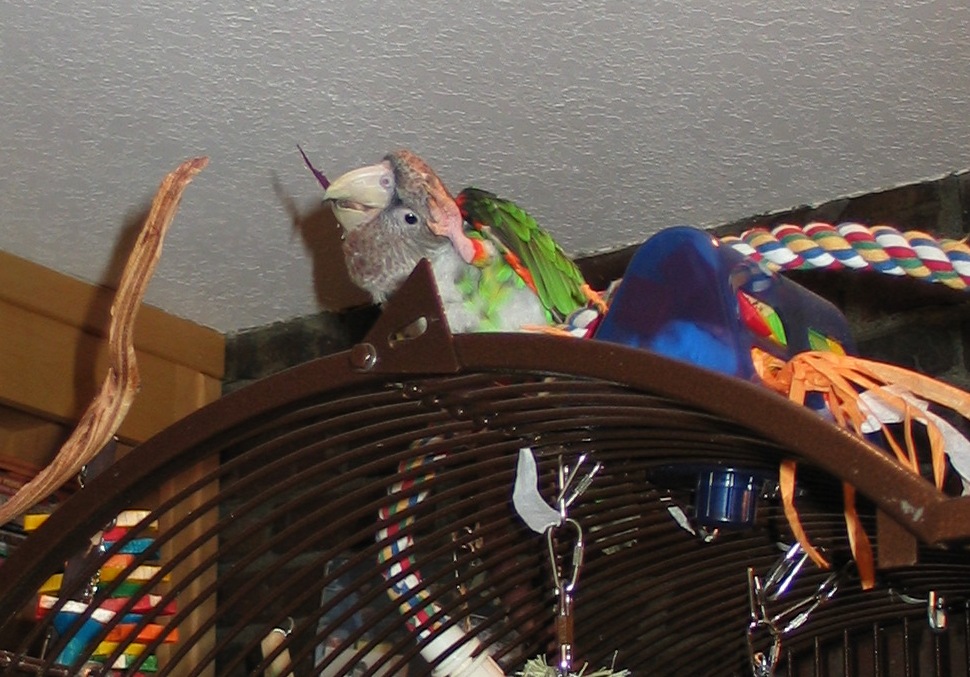
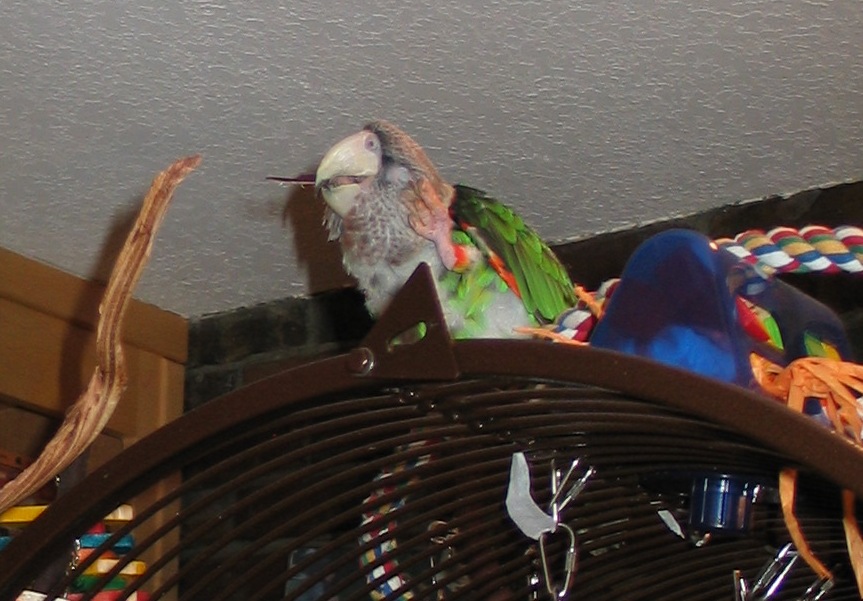
Does it get more adorable than this little parrot? Like a baby would, Oscar-Wood, my Un-Cape parrot (Poicephalus fuscicollis), pacifies himself. An infant will suck on a finger or a pacifier (dummy in British English). Oscar-Wood sucks on a bit of wood he breaks off, and tickles his head and neck with pink, dexterous, hand-like claws, at the same time. He will fold one magical toe over the other three to create an ideal tickling implement. (Click on images to enlarge.)

I’ve tried to Google about the remarkable claw-eye-beak (“fine motor”?) coordination displayed by the parrot (watch this genius macaw), but can’t find much. (Help? Here is The Smart Bird Page, more anecdotal and amusing than scientific.) When I first became a parront, I was unaware of the remarkable claw- structure and dexterity the parrot possesses. Unlike most ordinary birds who have one back- and three front claws , the parrot has two in front and two at the back. These he cups when he eats, as the parrot will delicately hold a piece of food in his claw and pick at it with his beak. The parrot will also use these delicate appendages to manipulate objects. For example, Oscar-Wood stabilizes this barrel-of-fun with his pink claws, and then uses his mother-of-pearl beak to twist the thing in the right direction and then pull the barrel to pry a nut from within.

The human being’s fantastic facility with his digits is one indication of his great intelligence. In addition to their hand-like structure, the parrot’s claws, similarly, are huge in proportion to his little body—approximately a fifth of the size of his body when stretched out. This relationship is surely mirrored in the area given over in the parrot’s brain to the claws.

As I’ve reported here before, there has been good, if not sufficient, research into the great intelligence of the parrot, especially of the African Grey (who easily trumps the primates). But I have not seen specifics about the adroit claws that so fascinate me.

So too are the language-acquisition skills of the parrot remarkable. Human beings have often, conveniently, explained the parrot’s speech as pure mimicry. Just as a child would, however, the parrot absorbs the language he is capable of acquiring through imitation, behavioral conditioning, reinforcement, all in context. As is the case with toddlers, the orphaned parrot (who has been in a shop or shelter for too long) will have often missed the crucial, optimal period during which language is learned. I find that Oscar-Wood, who spent the first 4 years of life in a shop, caged, mostly, has fewer language skills than little T. Cup, who arrived in our home as a 7 month old baby. T. Cup uses words in context. If I’m out of the room, he’ll call, “Mommy, mommy.” He has just learned the great benefits that come with demands for “Daddy, daddy.”

As I type, he is muttering to himself (after causing a racket by bashing his water bowel): “Stop it, stop it.” Around food time, it’s “Yummy-yummy.” When caged, he’ll emit cries of “Outside, outside.” Should T. Cup become very noisy, Oscar-Wood will scold him in his cute little voice: “Step-up, step-up,” which is the command parronts give their parrots to step-up onto them.

Humans love to watch Disneyfied, talking dogs, pigs, spiders—all animals that DON’T TALK, and have very few human attributes. Indeed, the parrot is the most proper object of Anthropomorphism.

However—and I know I’ll anger the wonderful woman bird-breeder who sold us these two characters—I don’t think parrots are suitable pets for most people. They are far too labor-intense, needy, sensitive and sentient. A constantly caged, lonely, unattended parrot will immediately become a “problem bird” (the owner being the real problem), who will soon be the object of abuse.

I am oh-so-very fortunate to work from home. Thus, my parrots are seldom caged; talk to me constantly, and have a flock-like arrangement with us. Cage these social creatures and deny them the one-on-one bond formation their biological blue-print dictates—and you have a tragic, depressed, feather-denuded little bird.

Think about it: Many parrots pair for life, create creches in which they raise their young; and when a Hyacinth Macaw, for example, loses a partner, the widow/widower is then adopted by an intact pair. This rather advanced social life precludes adaptation to a lonely, caged existence.

I, Obama

Barack Obama, Celebrity, Debt, Ethics, Etiquette, Foreign Policy

My reference in the title is to “I, Claudius,” an “award-winning television serial, based on a book about the Roman Emperor Claudius.”

Jim Kouri of the Examiner.com talks about President Obama and First Lady Michelle’s four-day trip to India:

“The U.S. will spend upwards of $200 million per day on President Barack Obama’s visit to Mumbai. Based on the projection that he’ll stay in India for four days, American taxpayers will be paying close to $1 billion so that the President and his entourage of close to 1,500 people will enjoy first-class accommodations
The huge amount of around $200 million will be spent on security, stay and other aspects of the Presidential visit,” a top official of the Indian government told the BBC.
The people accompanying the Obamas include Secret Service agents, US government officials and journalists favorable to the Obama White House.
Even Indian government officials aren’t certain what what will be accomplished during the Obama visit.”

It appears that this trip is the First Lady’s ostentatious sojourn to Spain on steroids. Somewhere in the US, productive activities are being suspended in order to fund the POTUS, the FLOTUS and their lavish lives. Remember though, that this outlay is nothing as compared to the cost of the legislation He devises. In fact, a $1 billion ransom would be a good deal if we could ensure that He never signed another bill into law, except to nullify what went before.

UPDATED: The Founders Reduced

Africa, Colonialism, Ethics, Founding Fathers, History, Human Accomplishment, Left-Liberalism And Progressivisim, Nationhood, Political Correctness, Propaganda, Pseudo-history, Race, Racism

After a conference (some photos are posted below) in Baltimore, I decamped to Old Town Alexandria (still occupied federal territory) to do some sightseeing. That meant staying away from the venue from which Glenn Beck and his 9/twelvers choose to rouse the nation: DC. Incidentally, a gentle bouquet of sewerage blanketed DC when I landed at Reagan National Airport. It lingered for days.

I, of course, needed no olfactory reminders to steer clear of DC. We headed into Virginia. Fredericksburg, Charlottesville, and Orange: The landscape took my breath away. So beautiful, so steeped in history and patriotism. One could so clearly see why magnificent men once defended these places to the death.

Sadly, after touring George Washington’s Mount Vernon, James Madison’s woefully neglected Montpelier, and Thomas Jefferson’s home, Monticello, Sean and I turned into betting men. The bet? In what room, or stage of the guided tour, would our guide begin to deconstruct the founders for slavery, making sure that all present understood how compromised were these brilliant and brave individuals because of that peculiar institution.

Whites had been taught well. Many of the questions fielded touched on slavery; most of those present were eager to display their exquisite sensitivity. Achingly sensitive: Although the slave quarters were closed for renovations, one young man had draped himself over a windowsill. There he stood motionless, deep in thought, his frame racked by (very showy) pain.

An African-American family sauntered toward the estate plan, where I lingered. The father pointed his son toward one thing and one thing only: “Here, son, were the slave quarters. Here is their unmarked tomb,” said dad. They left. Thus was the boy instructed to keep those suppurating sores oozing with resentment. Not a word did dad disgorge about George Washington. Thus was Washington whittled down.

At Monticello we were joined by my good friend the economist and historian Tom DiLorenzo. Tom has blogged about another libel leveled against “The Great Man,” on Lewrockwell.com: the notion that “Jefferson fathered six children with slave Sally Hemmings,” disseminated by the “school-marmish tour guide.”

On average, by the time you arrive at the second room in any given house, you are hit with the requirement that Honky expiate over slavery. The Founders, it is intimated, are beyond repair given the contradiction they embodied. This was the gist of the message.

One pimply female gatekeeper—she was ominously standing sentinel at Washington’s tomb—wearing trendy shades and a shortish skirt, explained to a concerned middle-aged white man: “Washington freed his slaves towards the end, but kept some on because “he was addicted to the life style.” Imagine using contemporary pop-psyche vernacular in this context!

HISTORY FROM BELOW. The history of the US is what the Legislative Black Caucus, the NAACP, and so-called civil-rights activists say it is; it’s history from below; a litany of complaints and contrivances from self-styled victims’ groups on behalf of minor historical figures.

Outside “the plantation office building where Stonewall Jackson died in Guinea Station, Virginia.”

Outside the plantation office building where Stonewall Jackson died, Guinea Station, Virginia.

These little piggies, Ossabaw Island Hogs, belong to the very breed once bred by George Washington at Mount Vernon. This most innovative farmer, who used state-of-the-art technologies and thinking with respect to agriculture and conservation, was, naturally, nothing without the slaves (whom he and his ilk schooled).

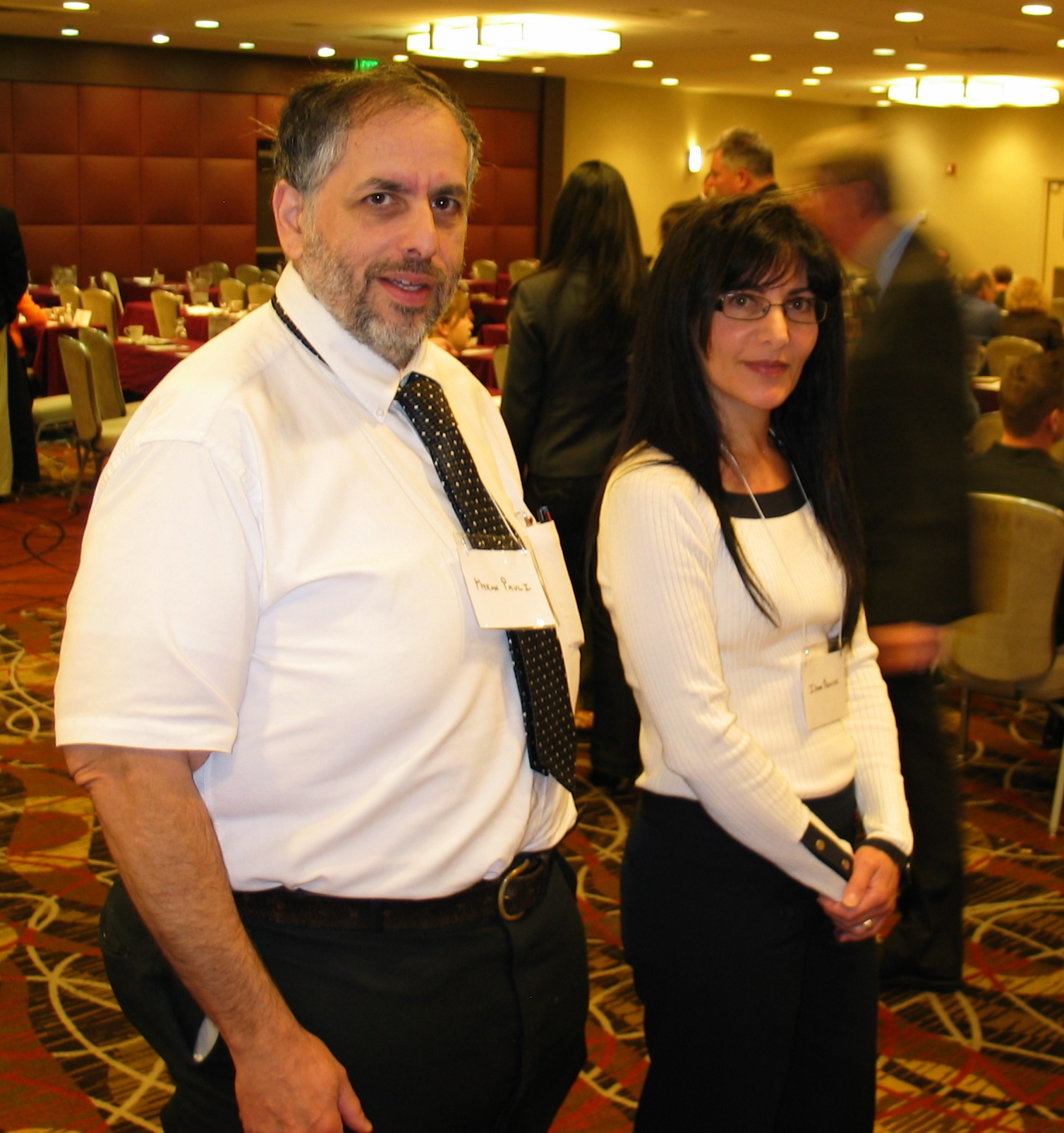
With Barely A Blog Star, Myron Pauli, who was good enough to attend the Mencken Club Conference.

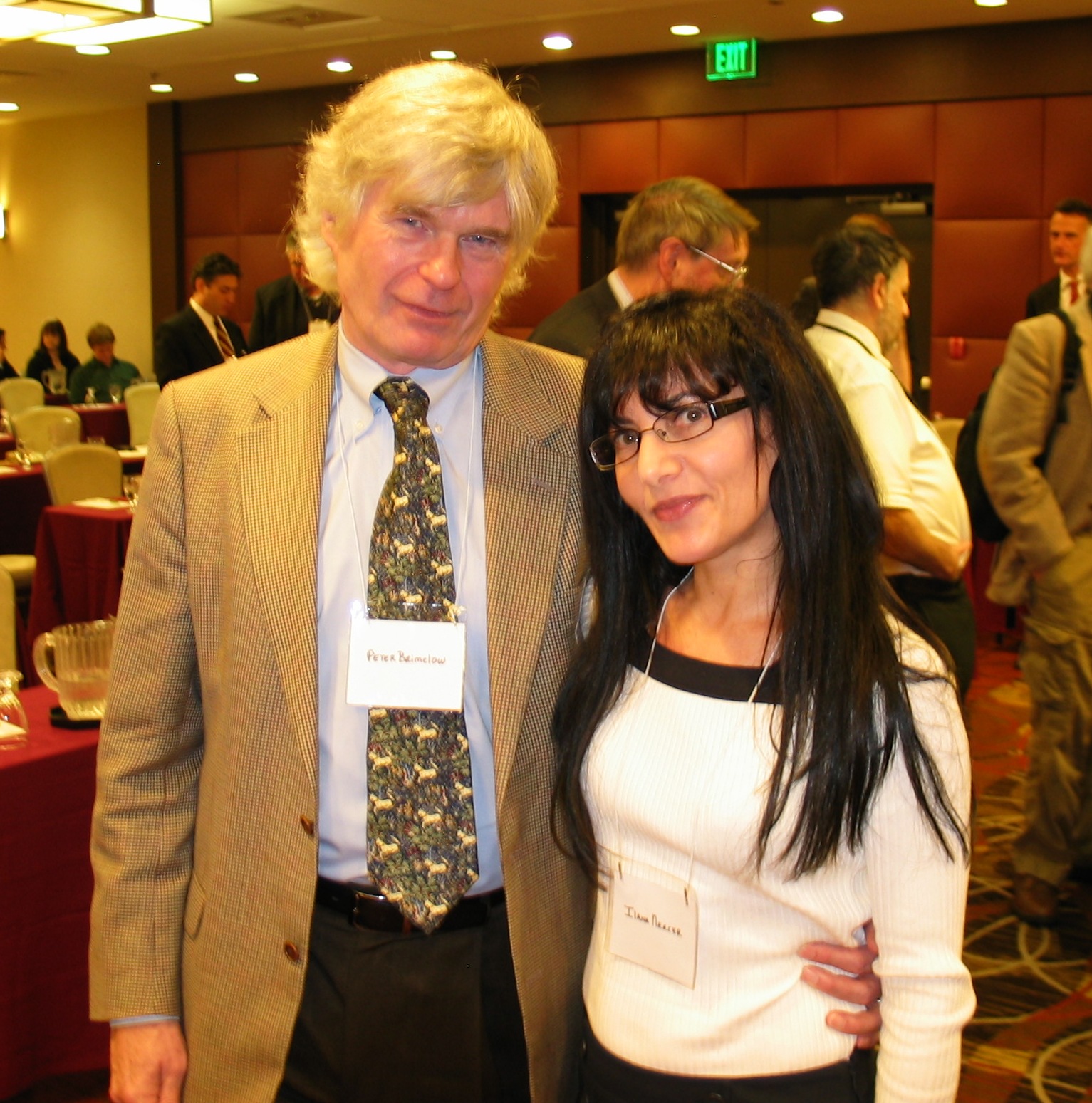
Peter Brimelow and myself.

UPDATE: I understand that David, in the Comment hereunder, is being cynical when he writes, “I got it, the founders were flawed, sinful men like me and you,” but the following bears saying:

No, the Founders were nothing like us. Not even close. I’m not talking as an idealist, but as a realist. Judging from their deeds and their words, the American Founding Fathers were immeasurably better than just about anyone on earth today (and that goes for that gnarled, somewhat stupid sadist, Mother Teresa. And yes, Christopher Hitchens nailed the woman).

Their actions tell us that they forsook their fortunes for a cause we no longer have the intellectual or moral capabilities to grasp: liberty.

Their writings evince an intelligence and a level of abstraction far beyond that evinced by most contemporary intellectuals. In fact, Charles Murray’s monumental work, Human Accomplishment, in which he comes up with 4,002 subjects who “dragged their fellow men out of wattle-and-daub hovels and pushed them into space rockets,” tends to support my harking to the past, not the present, for intellectual inspiration.

Slavery was debated vigorously and finally abolished by the English—not the Arab or African traders (who persist in the practice).

I cover this topic in my yet-to-be-published book, Into The Cannibal’s Pot: Lessons For The West From Post-Apartheid South Africa. It is a complicated subject. The missionaries in Africa, for example, regarded slaves as children to be de-tribalized and missionized. They were taught skills and trades; mission stations acted as havens for refugees fleeing tribal depredations in South Africa.

As you tour the homes of the founders mentioned above, you’re wont to hear about this or the other wonderful cabinet maker or marvelously gifted horseman, or farmhand, etc. Who do you think taught the slaves these skills and trades? The monarchs of Buganda or Ethiopia?

As I say, the Founders were advanced for their time in EVERY respect. Not perfect, but a great deal more perfect than most of us.